This article shouldn't need to exist. But it does, because the reality of being a woman running alone is different from the reality of being a man running alone. We're not going to pretend otherwise.
What we will do is give you practical, no-nonsense strategies that let you run confidently. Because the goal isn't to be afraid. It's to be prepared.
Before You Go
Tell someone your route and estimated return time. Every single time. A quick text to a partner, friend, or family member: "Running the park loop, back by 7:30." It takes five seconds and it matters. Share your live location. Most phones have a built-in location sharing feature (Apple's Find My, Google Maps location sharing). Turn it on for a trusted contact when you run. Some running apps (like Strava and Garmin) also have live tracking features. Carry your phone. Always. Not just for emergencies. For navigation, for calling someone, for recording if needed. Carry ID. A driver's license in your pocket, an ID bracelet, or a Road ID tag on your shoe. If something happens (medical or otherwise), responders need to know who you are.Route Planning
Run in populated areas. Parks with other walkers, well-traveled sidewalks, running paths with good sightlines. Avoid isolated trails, poorly lit streets, and areas with limited escape routes. Vary your route. Don't run the same exact loop at the same exact time every day. Predictability is a vulnerability. Know your exits. When running a new route, mentally note where you could go for help: open businesses, houses with lights on, busy intersections. Run against traffic (on the left side of the road if there's no sidewalk). You want to see cars coming toward you, not have them approaching from behind. Avoid headphones in both ears. This is a tough one because music makes running better. Compromise: use one earbud, use bone conduction headphones (they sit outside your ear canal), or keep the volume low enough to hear your surroundings.Time of Day
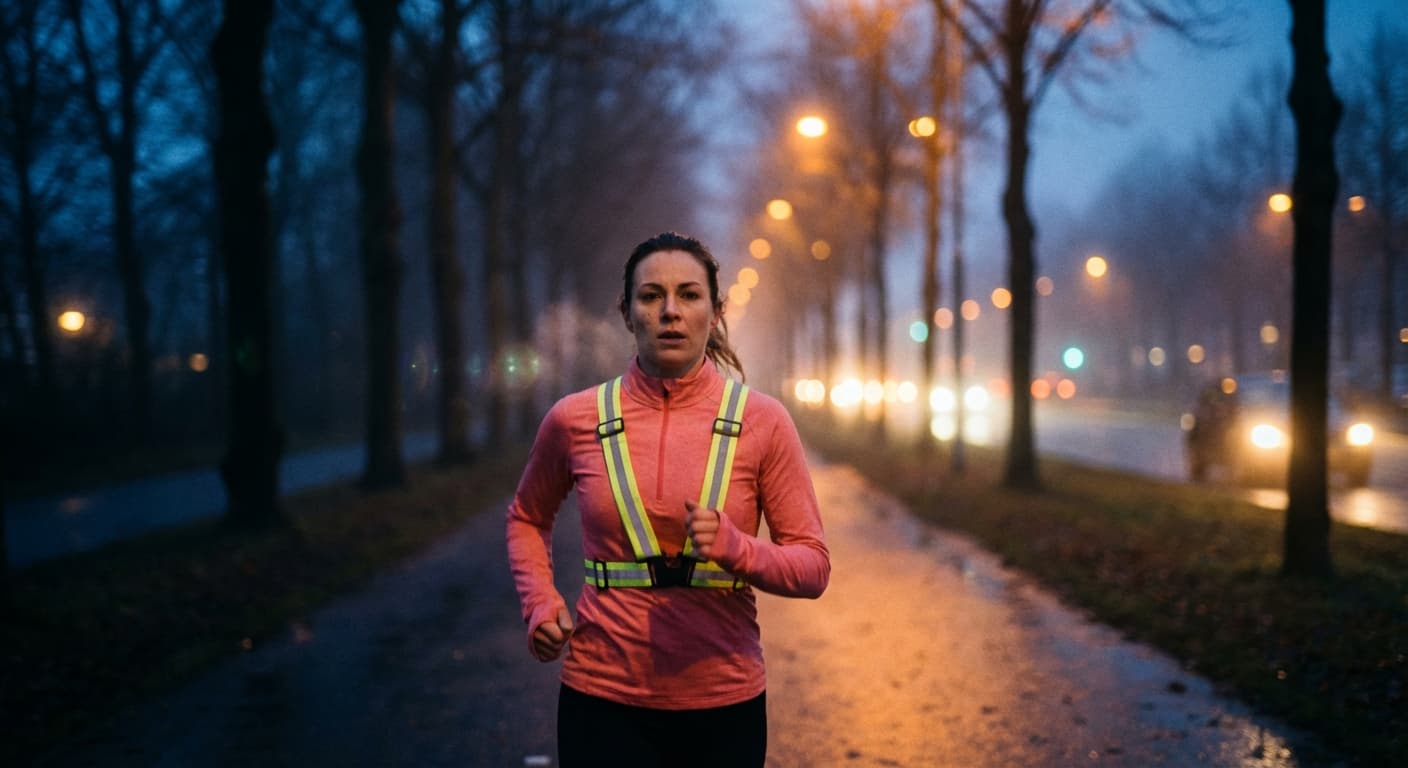
Daylight is safest. Early morning (after sunrise) and late afternoon are the best windows. If you must run in the dark, stick to well-lit, populated routes. Reflective gear isn't optional in the dark. A reflective vest, light-up armband, or headlamp makes you visible to drivers, which is a separate safety concern from personal safety. You need to be seen. Running at dawn or dusk? Wear bright colors. Your visibility drops dramatically in low light even before it's fully dark.Personal Safety Tools
These are personal choices. Some women carry them, some don't. Know your options:
Personal alarm (panic button). Small, clips to your waistband, emits a 120+ decibel alarm when activated. Brands like SABRE, She's Birdie, and Birdie+ are popular with runners. Loud enough to startle an attacker and alert everyone nearby. Pepper spray. Legal in most states (check your local laws). Small runners' versions clip to your hand or waistband. Practice using it so you're not fumbling in a stressful moment. Self-defense awareness. You don't need a black belt. Just knowing basic strategies helps: make noise, create distance, target vulnerable areas (eyes, throat, groin), and run toward people, not away from them. Your voice. If someone approaches you and you feel threatened, be loud. Yell. Scream. "Get away from me" carries farther than you think and draws attention.If You Feel Unsafe
Trust your gut. If something feels wrong, it probably is. Cross the street. Change direction. Go into a store. Call someone. You are never overreacting by prioritizing your safety. Make eye contact. If someone is following you or making you uncomfortable, look directly at them. This signals awareness. Most predators target people who seem unaware. Don't engage. If someone catcalls, comments, or tries to get your attention, don't respond. Keep moving. Don't slow down. Have a plan. Know what you'll do before you need to do it. "If someone approaches me, I'll run toward that busy intersection and yell." Having a mental plan reduces panic.Running with Others
A running buddy eliminates most solo safety concerns. If you don't have a regular running partner:
- Join a local running group or club
- Find a running partner through social media groups or apps
- Run in busy parks where other runners are present
- Bring your dog (dogs are both companions and deterrents)
Technology That Helps
- Live location sharing (Apple Find My, Google Maps)
- Safety check-in (some apps send an alert if you don't check in by a set time)
- Emergency SOS (iPhone: press side button 5 times. Android: varies by model)
- Running apps with safety features (Strava Beacon, Garmin LiveTrack)
Common Questions
Is it safe for women to run alone?
Yes, with reasonable precautions. Most women run alone safely every day. Awareness and preparation dramatically reduce risk.
What time is safest to run?
Daylight hours, especially mornings when paths tend to be populated with other runners and walkers.
Should I carry pepper spray when running?
It's a personal choice. If it makes you feel safer, carry it. Make sure you know how to use it quickly and check your local laws.
What should I do if someone follows me?
Change direction. Cross the street. Go into a business or toward other people. Call 911 if you feel threatened. Trust your instincts.
You deserve to run freely. Until the world is fully safe for that, be smart, be prepared, and don't let fear steal something that makes your life better.
Take the quiz and join a community of women who run on their own terms.