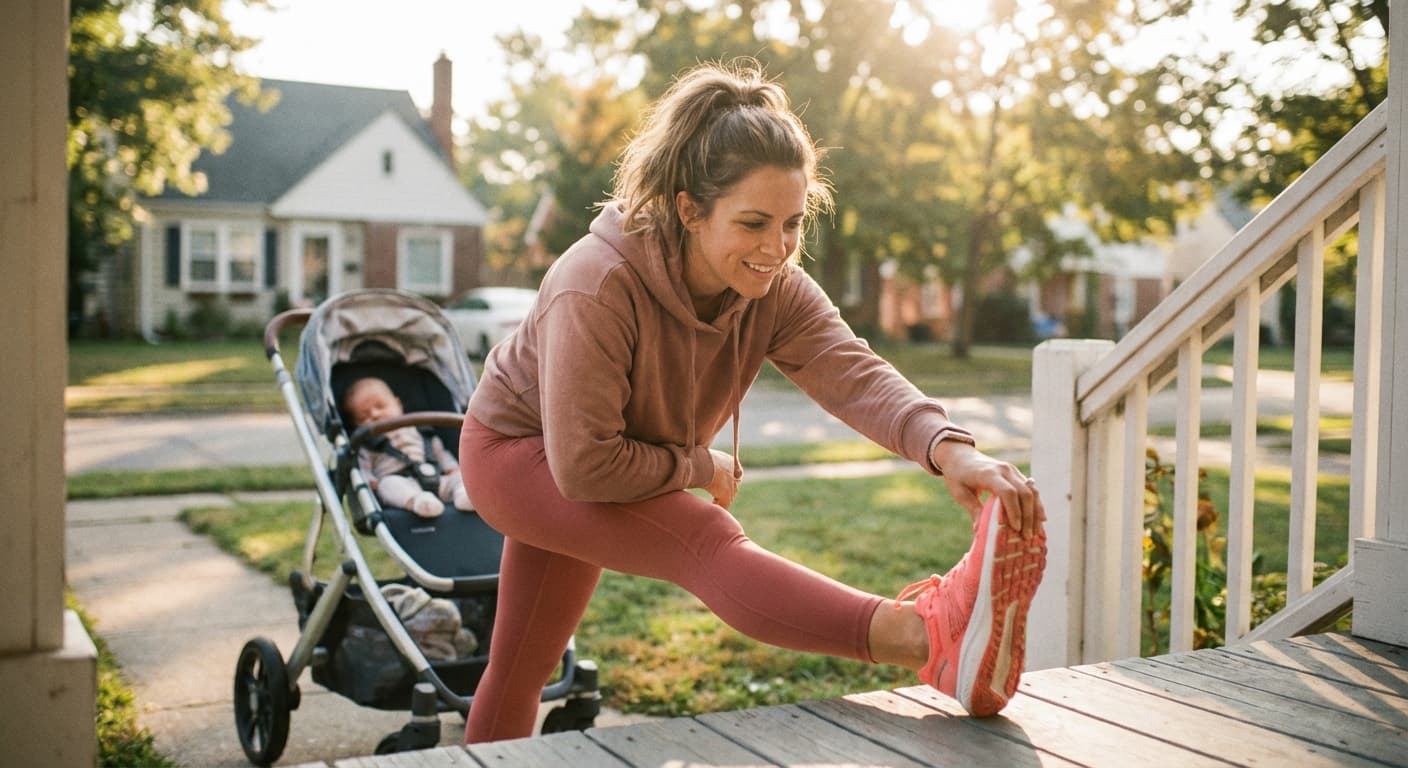
You grew a human. Your body stretched, shifted, and did things that should genuinely be considered superhuman. Now the baby is here, the dust is settling, and somewhere in the back of your mind, you're thinking about running again.
Good. That instinct means something. But how you return matters as much as when.
The Timeline (the Real One)
The minimum wait is 12 weeks postpartum. Not 6 weeks. Not "whenever you feel ready." Twelve weeks at the absolute earliest, and only after clearance from your doctor or midwife.The Returning to Running Postnatal Guidelines published by a team of leading physiotherapists recommends:
- 0 to 6 weeks: Walking only. Focus on rest, recovery, bonding. Pelvic floor breathing exercises.
- 6 to 12 weeks: Gentle strengthening. Walking with more structure. Pelvic floor assessment.
- 12 weeks+: Begin walk/run intervals IF you pass basic strength and pelvic floor benchmarks.
Tip: If you had a C-section, add another 2 to 4 weeks to this timeline. Abdominal surgery requires additional healing. Your doctor will guide the specifics.
Before You Run: The Pelvic Floor Check
Before your first jog, you should be able to do all of these without pain, leaking, or heaviness:
- Walk for 30 minutes continuously
- Single leg balance for 10 seconds each side
- Single leg squat (10 reps each side)
- Jog in place for 1 minute
- Hop on one foot (10 times each side)
- Single leg calf raise (10 each side)
Leaking when you run is common after pregnancy, but common doesn't mean normal. It's treatable. Don't accept it as "just part of having a baby."
The 8-Week Return to Running Plan
Once you've passed the pelvic floor benchmarks and have medical clearance:
Weeks 1 to 2: Walk 25 min with 4 x 1-minute jog intervals. Walk recovery between each jog. Three sessions per week. Weeks 3 to 4: Walk 20 min with 6 x 90-second jog intervals. Three sessions per week. Weeks 5 to 6: Walk 15 min with 4 x 3-minute jog intervals. Three sessions per week. Weeks 7 to 8: Walk 10 min with 3 x 5-minute jog intervals, building toward 15 to 20 minutes of continuous running. Rules for every session:- Stop immediately if you experience pelvic heaviness or leaking
- Keep the pace conversational (slow and easy)
- No speed work, hills, or long runs yet
- Rest at least one day between running sessions
- Drink plenty of water, especially if breastfeeding
Breastfeeding and Running
Running while breastfeeding is perfectly safe. The American College of Obstetricians and Gynecologists confirms that exercise doesn't affect milk supply or quality.
Practical tips:
- Feed or pump before running. Full breasts + bouncing = uncomfortable.
- Wear a high-support sports bra. This is non-negotiable. Your breasts are larger and heavier.
- Stay hydrated. Breastfeeding already increases your fluid needs. Running on top of that means drinking more than you think.
- Eat enough. You need about 500 extra calories per day for breastfeeding, plus additional fuel for running. Under-eating is the fastest way to tank your milk supply and your energy.
Your Core After Pregnancy
Pregnancy stretches your abdominal muscles apart (diastasis recti). Some degree of separation is normal and happens to nearly every pregnant woman. For most, it resolves on its own within a few months. For some, it needs specific rehab.
How to check: Lie on your back, knees bent. Place two fingers just above your belly button. Lift your head slightly. If you feel a gap wider than two fingers, or if your fingers sink deep without resistance, you may have significant diastasis.A gap of 1 to 2 finger widths is normal postpartum. Wider than that, or a gap with no tension, means you should work with a physio before adding running. Core stability is essential for absorbing the impact of every running stride.
Exercises that help: dead bugs, bird dogs, modified planks, pelvic floor engagement with breathing. Avoid crunches, sit-ups, and heavy lifting until the gap resolves.
The Emotional Side
Nobody talks about this enough. Coming back to running after pregnancy is emotional. Your body is different. Your pace is different. Your available time is laughably different.
You might feel frustrated that something that used to be easy now feels impossible. You might cry after your first run (tears of joy, relief, exhaustion, or all three). You might feel guilty for taking time away from your baby, even though every expert says the opposite: exercise makes you a more patient, energized, present parent.
All of it is valid. Give yourself the grace you'd give a friend.
When to See a Professional
See a pelvic floor physiotherapist if you experience:
- Leaking urine during running, jumping, or sneezing
- A feeling of heaviness or pressure in your pelvis
- Pain in your lower back, hips, or pelvis that doesn't improve with rest
- Diastasis recti that isn't improving after 3 months
See your OB-GYN or midwife if:
- You have persistent bleeding after returning to exercise
- You feel faint or dizzy during light activity
- You have signs of postpartum depression or anxiety that interfere with daily life
These aren't signs of weakness. They're signs that you need support, and support is available.
Common Questions
When can I start running after a C-section?
Most doctors recommend waiting 14 to 16 weeks after a C-section before running. The abdominal incision needs time to heal fully. Start with walking and core strengthening, and get cleared by your surgeon before jogging.
Will my body ever feel the same as before?
Different, not worse. Many women run faster and stronger postpartum than they did before pregnancy. Your body has been through the ultimate endurance event. Give it time, and it will surprise you.
Can I run with a stroller?
Yes, once your baby is at least 6 months old and has head and neck control. Use a jogging stroller (three wheels, hand brake, wrist strap). Keep one hand on the stroller at all times. It changes your form slightly, so keep the pace easy.
What if I was a runner before pregnancy?
Your fitness history works in your favor, but you still need to follow the gradual return. Your cardiovascular system bounces back quickly. Your pelvic floor and connective tissue take longer.
You'll get there. Not on anyone else's timeline. On yours. Every postpartum run is a celebration of what your body can do, not what it used to do.
Take the quiz and get a coach who understands postpartum bodies and builds your plan around your new life.