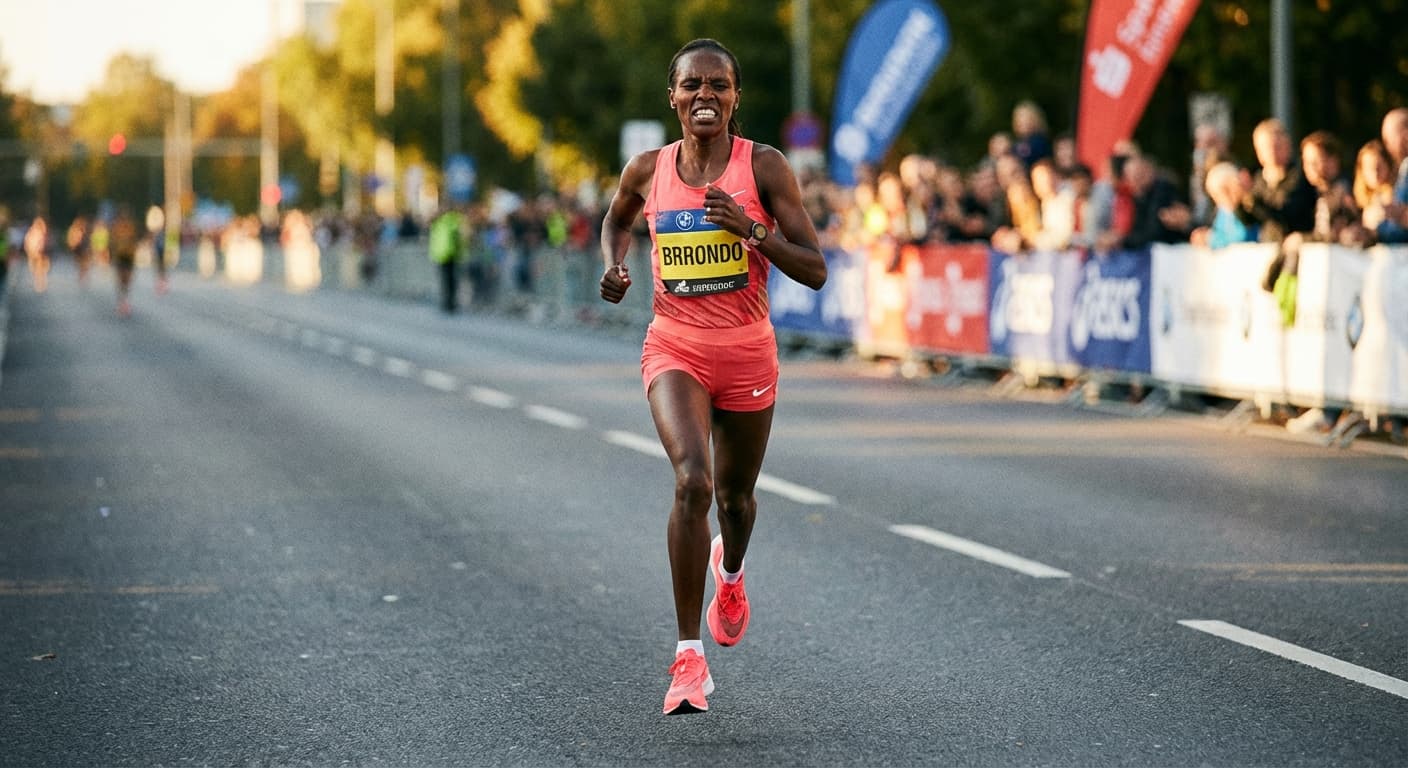
The marathon has been getting faster for decades. Here are the numbers at the very top of the sport and what they mean for the rest of us.
Current World Records
| Record | Runner | Time | Race | Date |
|---|---|---|---|---|
| Men's world record | Kelvin Kiptum (Kenya) | 2:00:35 | Chicago Marathon | October 2023 |
| Women's world record | Ruth Chepngetich (Kenya) | 2:09:56 | Chicago Marathon | October 2024 |
Kiptum's 2:00:35 brought the men's record within striking distance of the 2-hour barrier. Chepngetich's 2:09:56 shattered the women's record by nearly 2 minutes.
For context: 2:00:35 is a pace of 4:35 per mile for 26.2 miles. Most recreational runners can't hold that pace for a single mile.
Major Marathon Course Records
Men
| Marathon | Record | Runner | Year |
|---|---|---|---|
| Berlin | 2:01:09 | Eliud Kipchoge | 2022 |
| Chicago | 2:00:35 | Kelvin Kiptum | 2023 |
| London | 2:01:25 | Kelvin Kiptum | 2023 |
| New York City | 2:05:05 | Tamirat Tola | 2024 |
| Boston | 2:03:02 | Geoffrey Mutai | 2011 |
| Tokyo | 2:02:16 | Eliud Kipchoge | 2024 |
Women
| Marathon | Record | Runner | Year |
|---|---|---|---|
| Chicago | 2:09:56 | Ruth Chepngetich | 2024 |
| Berlin | 2:11:53 | Tigst Assefa | 2023 |
| London | 2:15:25 | Peres Jepchirchir | 2024 |
| New York City | 2:22:37 | Margaret Okayo | 2003 |
| Boston | 2:19:59 | Hellen Obiri | 2024 |
| Tokyo | 2:15:50 | Sifan Hassan | 2024 |
How Fast Is a 2-Hour Marathon?
To break 2 hours, a runner would need to average 4:34.5 per mile for 26.2 consecutive miles. That's:
- 100 meters in about 17 seconds (sprinting speed for most people)
- 400 meters in 68.5 seconds (faster than most high school track times)
- For over two hours straight
Eliud Kipchoge ran 1:59:40 in 2019 during the INEOS 1:59 Challenge, but it was under controlled conditions (pacemakers, flat course, no official race) and doesn't count as a world record.
The official sub-2 remains unbroken. It's a matter of when, not if.
Women's Marathon Progress
Women weren't allowed to officially run marathons until the 1970s. The progress since then has been extraordinary:
| Year | Record | Improvement |
|---|---|---|
| 1971 | 3:01:42 | First official women's marathon record |
| 1983 | 2:22:43 | Sub 2:25 broken |
| 2003 | 2:15:25 | Paula Radcliffe's legendary record |
| 2023 | 2:11:53 | Tigst Assefa smashes the record |
| 2024 | 2:09:56 | Chepngetich goes sub 2:10 |
Women's times have improved by over 50 minutes in just over 50 years. The women's record is still being broken by bigger margins than the men's, suggesting there's more speed to come.
What This Means for You
You will not run a 2-hour marathon. Neither will I. But here's what's inspiring about these records: the same physiology that lets Kipchoge run 4:35 per mile is at work in your body when you run 10:00 per mile. The same cardiovascular adaptations, the same muscle fiber recruitment, the same mental resilience.
The elites just have more of it. But the process is identical. When you train, your body responds the same way theirs does. Proportionally, your improvement from 5:00 to 4:30 in a 5K is just as remarkable as their improvement from 2:01 to 2:00.
Common Questions
Who is the fastest female marathon runner ever?
Ruth Chepngetich of Kenya, with a time of 2:09:56 set at the 2024 Chicago Marathon.
Will a woman ever break 2 hours in the marathon?
Possibly, but not in the near term. The current women's record is about 10 minutes off the 2-hour mark. Given the rate of improvement, it could happen within the next few decades.
What is a fast marathon time for a recreational woman?
Sub 3:30 (Boston qualifying for ages 18 to 34) is considered fast. Sub 4:00 is excellent. Sub 4:30 is above average.
Records exist to be broken. And every personal record you set on your own journey is part of the same tradition.
Take the quiz and get a marathon plan that helps you write your own record book.